
Lab grown vs natural diamond: how to choose
A lab-grown diamond is a real diamond, made in a lab instead of underground.
It looks the same as a natural one, so you cannot tell them apart by eye. This guide shows how they differ, how to check a stone’s origin, how far apart their prices are, and which one fits your purpose.
What a lab-grown diamond actually is
A lab-grown diamond is a real diamond, made by people instead of forming underground.
It has the same carbon crystal structure and nearly the same chemical, optical and physical properties as a natural one. So origin is the one fundamental difference.
Moissanite is different. It is silicon carbide, not carbon, so it is not a diamond.
Lab-grown and natural diamonds look the same to the unaided eye, so sparkle cannot tell you where a stone came from. Choose on origin, budget and purpose, then check the paperwork. For a solitaire with a 0.40 ct centre stone, see the shared-prongs solitaire engagement ring.
How to tell the two apart
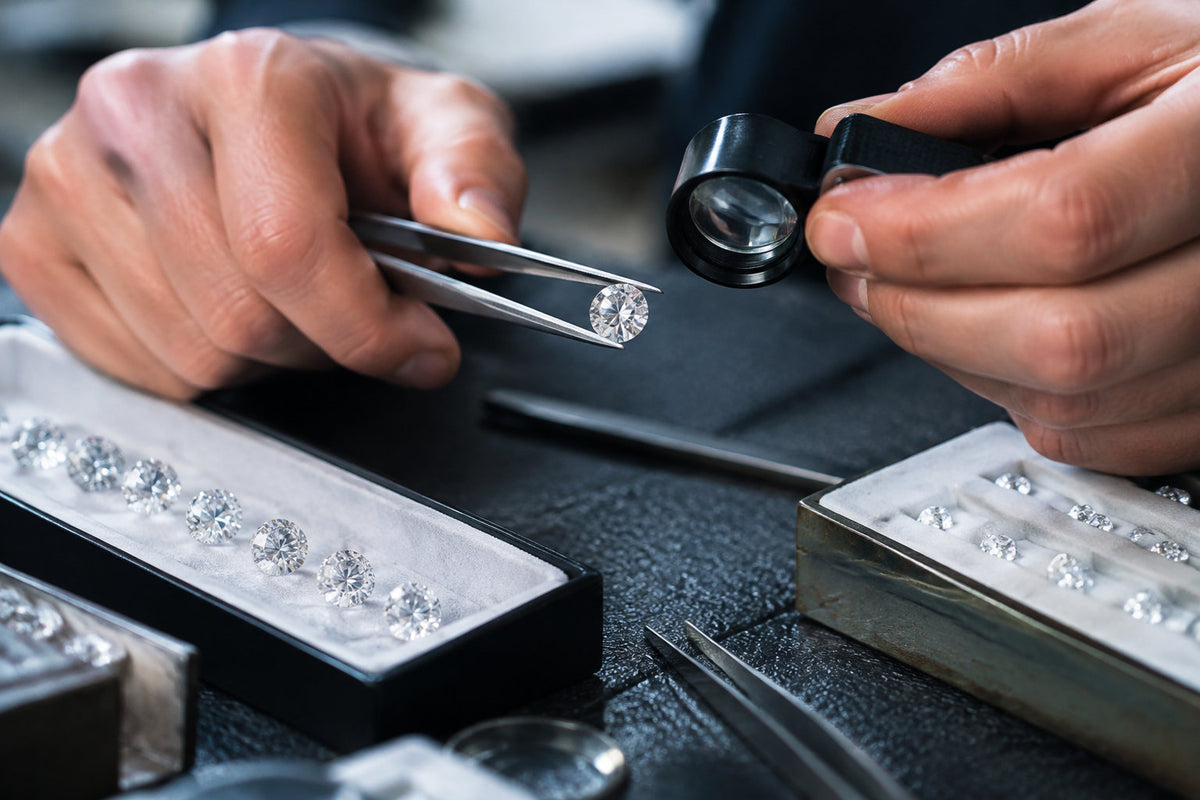
Eyes alone cannot separate the two. Origin shows in tiny crystal defects and impurities left by growth, which lab tools detect. A GIA iD100 gives a result in under two seconds: "Pass" for natural, further testing for lab-grown.
For a natural centre stone, compare the Round Diamond Halo Ring with these checks:
- Ask for the GIA report for the exact centre stone.
- Check that the report number and origin match the stone.
- Ask the jeweller to show the laser number on the girdle, the thin rim.
- Compare it with the report number; a mismatch is a warning sign.
Comparing the price, stone for stone
Lab-grown stones usually cost much less than natural ones of the same carat, colour and clarity.
The gap changes with size, grade and origin, so no single percentage applies. Ask each seller for the same carat, colour and clarity, then compare the two prices.
Compare full ring prices, not just the stones. For a halo style, see the Diamond Halo & Oval Cut ring.
| Criterion | Lab-grown, 2 ct | Natural, 2 ct |
|---|---|---|
| Carat weight | 2 ct | 2 ct |
| Colour and clarity | Matched | Matched |
| Diamond price | About C$3,500 | About C$35,000 |
| Metal and setting | Added to price | Added to price |
Which one fits your purpose
For an engagement ring
For an engagement ring, compare centre stones at the same carat and grade first. A lab-grown stone often buys more carat or a higher grade for the same budget.
A natural stone suits buyers who value geological origin. For a lab-grown centre stone, see the Eternity U-Setting Lab Grown Diamond Ring and compare its finished price.
A Canadian example compares two rings with the same colour and clarity, and shows what to confirm before paying:
- A two-carat lab-grown ring costs about C$3,500.
- A two-carat natural ring costs about C$35,000.
- Ask for the exchange, upgrade, return and warranty terms for that exact ring, in writing, with their time limits and conditions.
- Which matters more to you: more carat and grade for the money, or natural origin?
For a limited budget
On a limited budget, decide first what matters more. A lab-grown stone buys more carat for the same money. A natural stone costs far more for its origin.
Then compare finished ring prices, and check that both stones have a grading report. Otherwise the gap will mislead you. So: a bigger stone, or a natural one?
For ethical priorities
Ethics can point either way
Lab-grown: made by people
If you object to mining, a lab-grown stone avoids it. It is still a real diamond, so the ethical question moves to how it was produced.
Natural: formed underground
If you want a stone that formed in the earth, a natural stone fits that view. Its ethics depend on the mine it came from.
Neither category is ethically better by default. For the stone you are considering, which origin can the seller document?
Will either diamond hold its value?
The price you pay does not tell you what the stone will fetch when you sell it. Neither a natural nor a lab-grown diamond has a reliable resale price, so do not count on getting your money back.
Before you buy, ask the jeweller what they would offer you for this exact stone and setting, and get the answer in writing if you can.
Neither type is a guaranteed investment, and lab-grown prices have fallen as production has grown. Ask your jeweller what they would offer for this exact stone and setting, and whether a grading report comes with it.
If you want a five-stone setting, compare the Semi Eternity Five Stone Lab Grown Diamond Ring on the same questions.
The lab-grown pieces in the RNB Jewellery collection
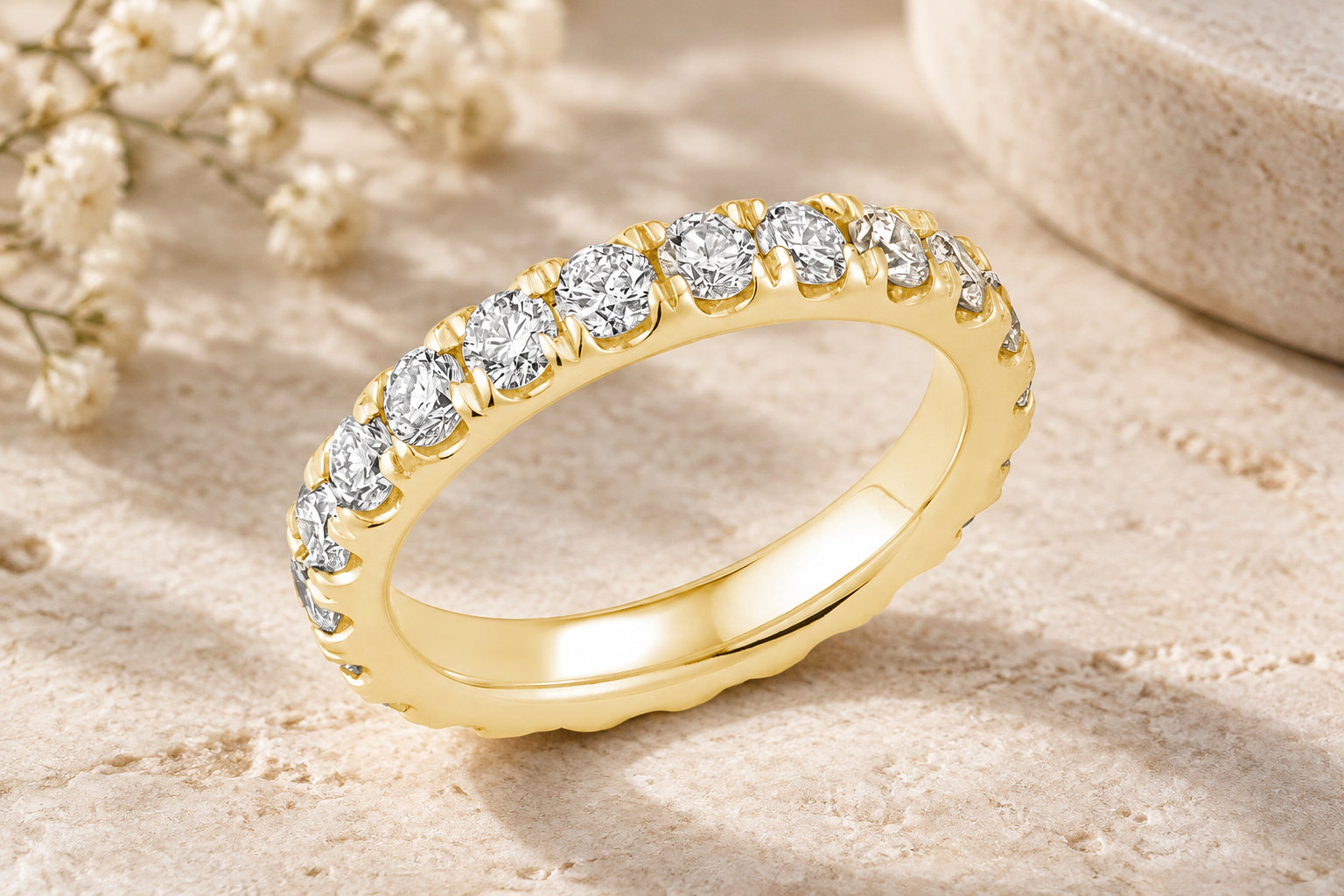
Both RNB Jewellery lab-grown pieces are 14K gold, with diamond counts and total weights stated. Colour and clarity grades affect both price and look, so ask the jeweller for both before you buy.
Then get the seller’s written terms on warranty and returns, since prices require a login. For a halo setting in 10-karat gold, see the pointed halo lab-grown diamond ring.
Lab-Grown
Explore RNB Jewellery’s Lab-Grown collection to see its lab-grown diamond pieces.
Explore the collectionFor earrings, see the pear shape stud lab grown diamond earrings.
| Criterion | Eternity Classic Ring | Classic Bangle Semi Eternity Bracelet |
|---|---|---|
| Setting | Full eternity | Semi-eternity |
| Metal | 14K, yellow or white | 14K, yellow or white |
| Stone count | 22 accent diamonds | 28 accent diamonds |
| Total weight | 2.00 ct, or 3.00 ct | 1.88 ct |
| Suitable buyer | Ring buyers, sizes 4 to 12 | Bracelet buyers |
What the ethics question really comes down to
Lab-grown origin alone does not prove a smaller environmental footprint. Growing a stone takes energy, and its source changes the impact, so ask the seller for production energy data in writing.
The Kimberley Process certificate covers rough diamond shipments only, not the finished ring or every ethical concern. Check it, but do not stop there.
Ask every seller for these records:
- Where the stone came from, and whether it was mined or grown.
- For lab-grown, how it was made and which energy source was used.
- Written proof for any environmental or ethical claim.
- Ethical preference is a valid reason to choose either origin.
- For a lab-grown bangle, review the Classic Bangle Semi Eternity Bracelet and ask for proof.
Origin is the one real difference between the two, and a grading report is what confirms it. Let your budget and purpose decide the rest.
Next, ask two or three sellers for the same carat, colour and clarity, with warranty and return terms in writing. Then compare the finished ring prices.
FAQ
Does a lab-grown diamond need different care than a natural one?
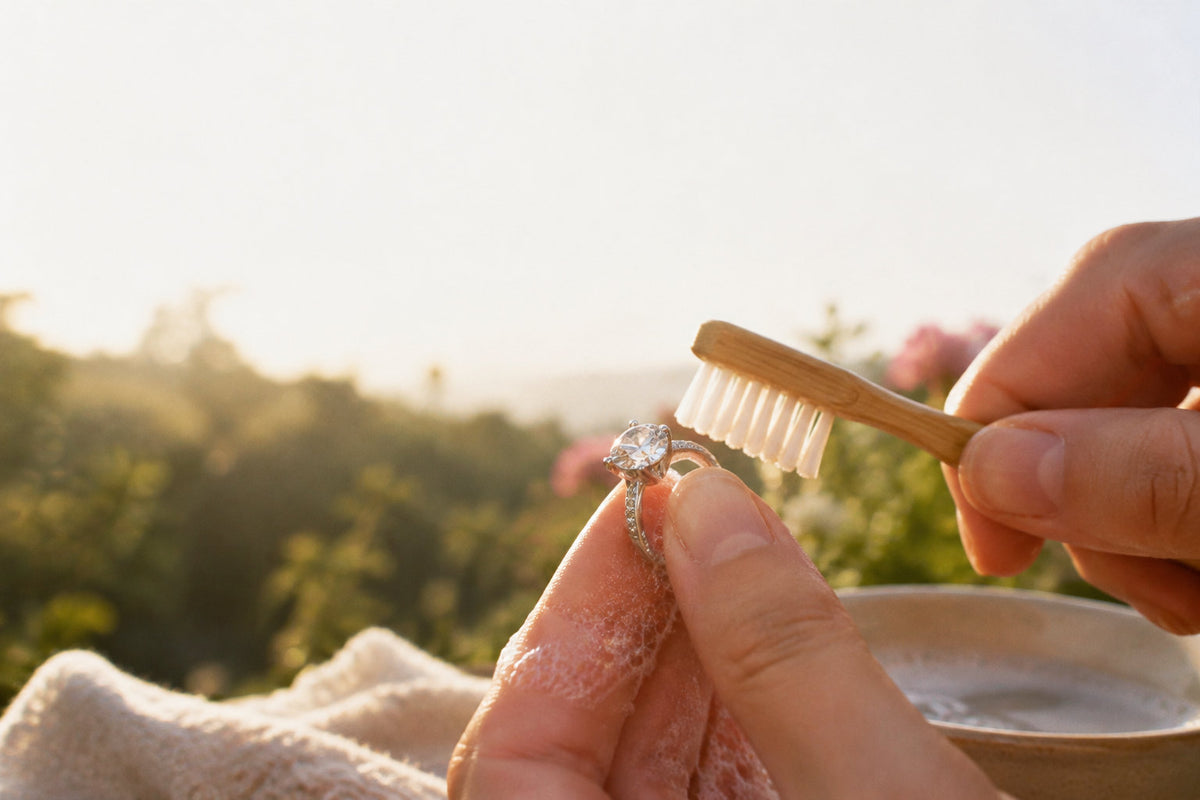
No. Clean a lab-grown diamond the same way as a natural one, with warm water, mild soap and a soft brush. If a stone feels loose, have the ring checked, whatever the origin.
Is a lab-grown diamond ring suitable for everyday wear?
Yes, it is. Diamond scores 10 on the Mohs hardness scale, the top of the 1-to-10 range, so a lab-grown ring resists scratches well in daily wear. If a stone ever feels loose, have the ring checked by a jeweler.
Which gold, 14K or 10K, suits a lab-grown diamond ring better?
Choose 14K if you want more pure gold and a richer colour, and 10K if price or hardness matters more.
The stone’s origin does not decide it, since both are gold alloys. Ask each maker how the setting is made before you decide.