

How to measure ring size at home for a perfect fit
A ring one size too small pinches the finger, and one a size too large keeps slipping off. Without a jeweller at hand, you need a reliable way to find your own size.
This article shows you how to measure your ring size at home, read the result, and convert it to the sizing system you need.
Choose the right finger and the right moment
Measure the exact finger and hand that will wear the ring. Sizes differ between fingers, and the ring finger on your dominant hand is often about half a size larger.
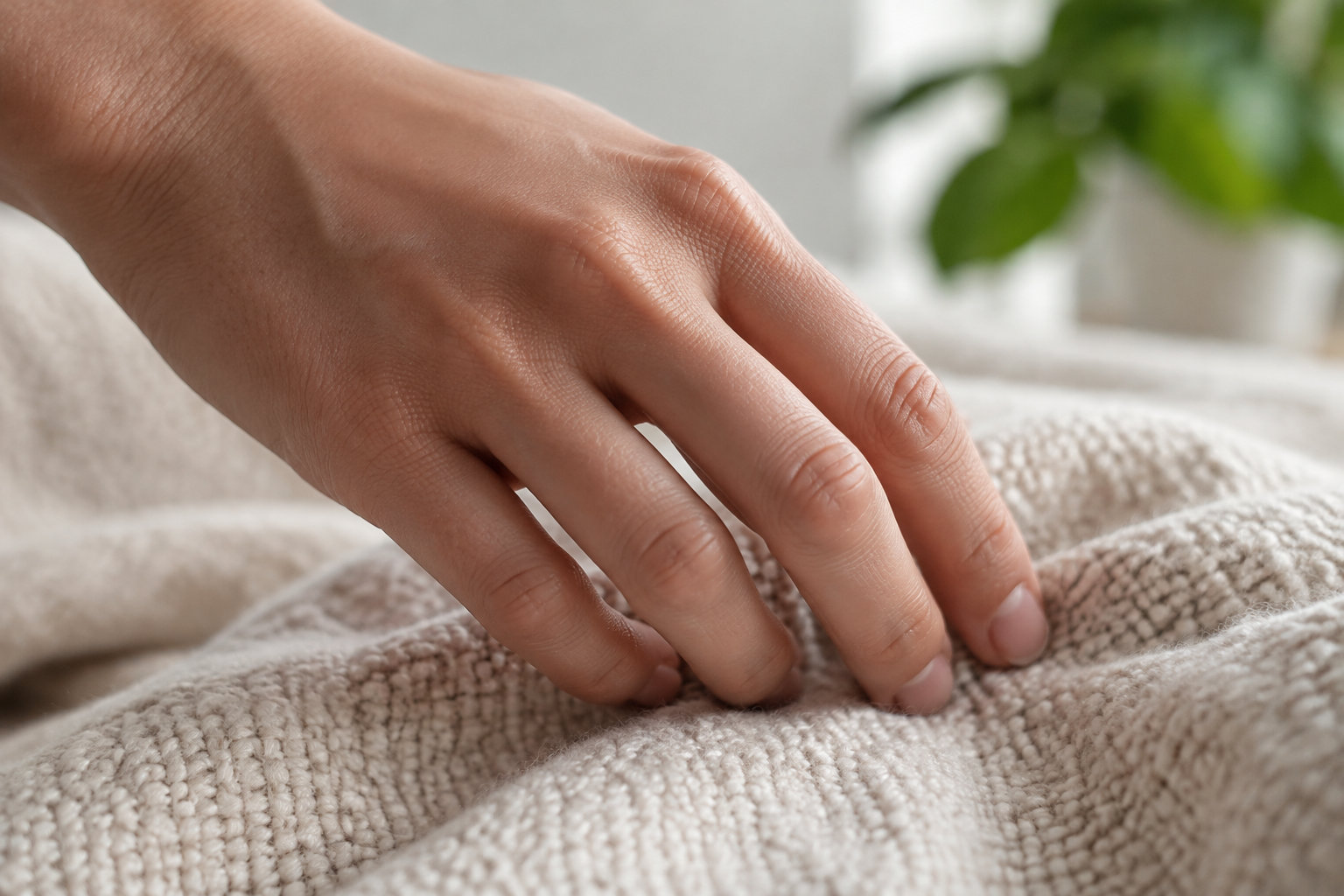
Next, check the knuckle. If it is wider than the base of your finger, a ring sized to the base may not slide over it. Measure at the knuckle too, and choose the size that passes over it.
Fingers shrink in the cold and swell in the heat, so measure indoors at room temperature, not straight after coming in from outside. Measure when your hands are at their usual size.
Average sizes (women 50 to 54, men 58 to 62 in French) are only starting points. Measure your own finger.
Measure with a tape, string or paper strip
Using a flexible tape measure
Use a soft tape and follow these steps:
- Wrap the tape around the finger where the ring will sit.
- Keep it snug, but never tight or pressing into the skin.
- Read the millimetres where the tape overlaps.
- That number is your French size: 54 mm means size 54.
- If your knuckle is wider than the base, measure it too and check that the ring slides over it.
Using string or paper and a ruler
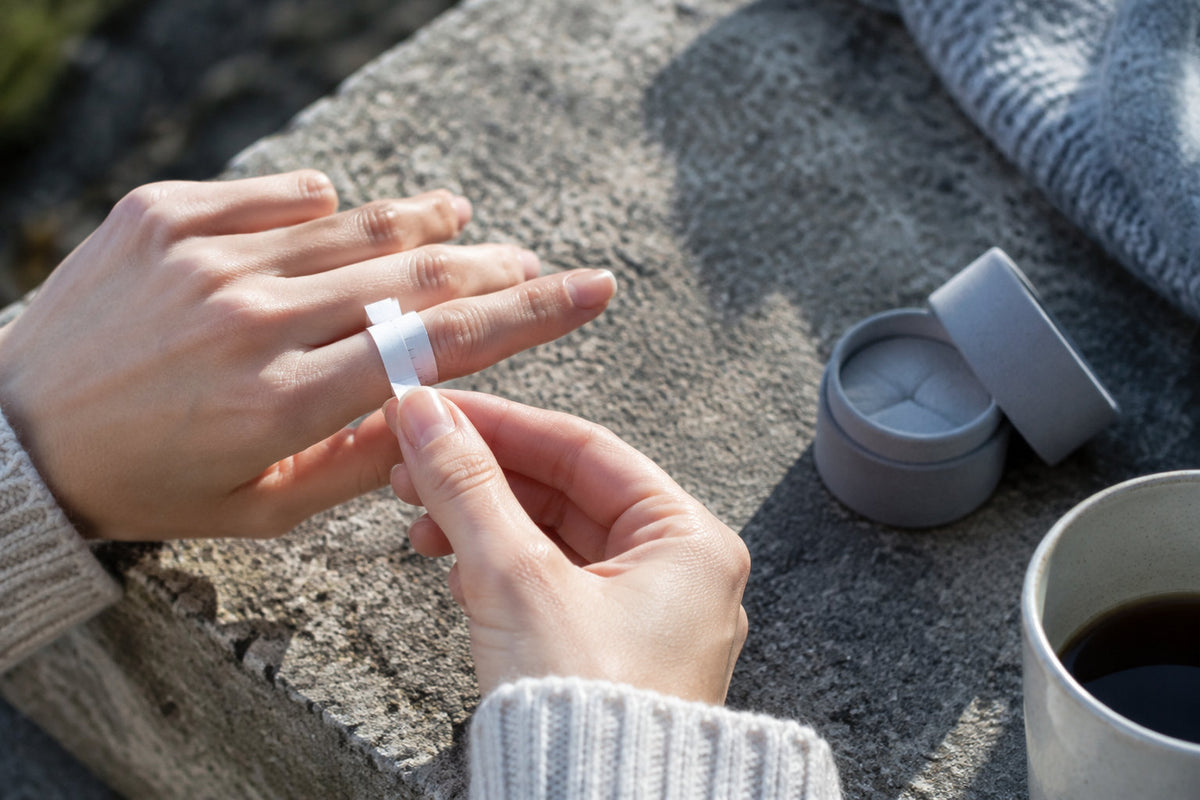
Wrap a string or narrow paper strip around the finger where the ring will sit. Mark the strip where the two ends meet.
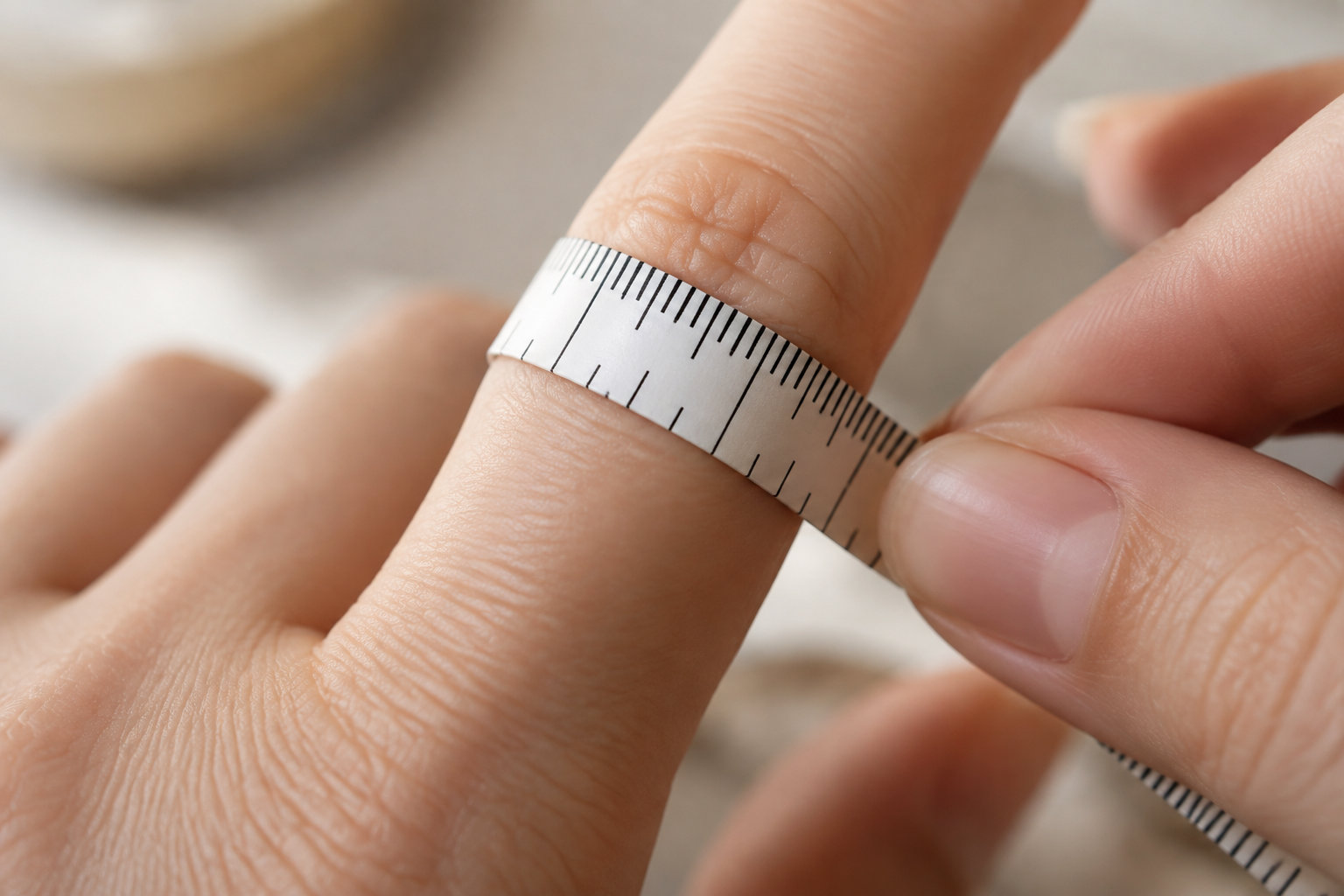
Lay the strip flat and measure the length from the start to the mark in millimetres with a ruler. That number is your French size.
String can stretch, and paper can bend, curl or tear, so the length you measure is never exact. Repeat the measurement until you get the same result twice.
If the mark falls between two sizes, choose the next size up.
Measure a ring you already own
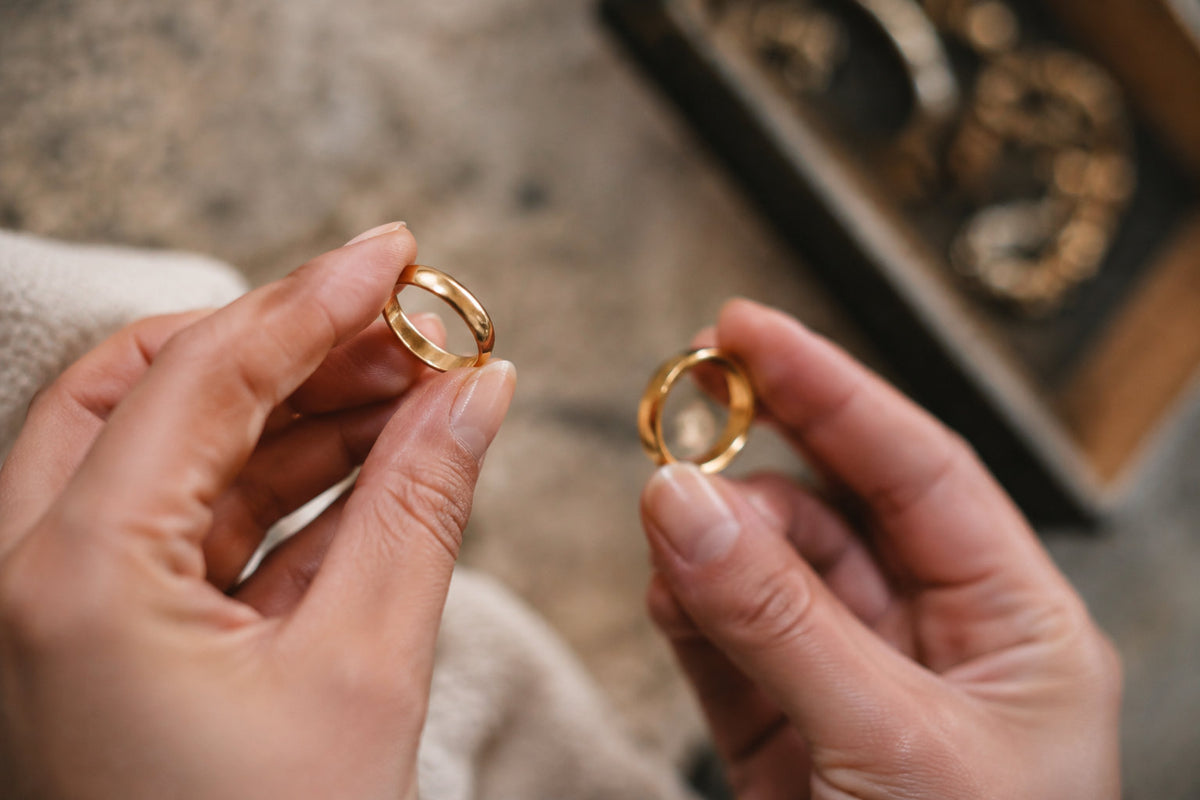
Start with a ring that already fits the same finger. Take it off, lay it flat, and measure straight across the inside, from one inner edge to the other.
That number is a reliable reference, but only if the ring is perfectly round. A squashed or oval band gives a wrong reading, so check its shape first.
Measuring the outer edge adds the metal thickness on both sides, so the reading comes out larger than your real size. Find the size from the inside diameter on the chart: 17.20 mm gives size 54, not 17. Multiply the diameter by π to check the circumference, about 54 mm. Have a jeweller confirm the size before you order.
Use a printable ring sizer
Print the sizer at true scale, then check it against a ruler before you use it:
- Set the print scale to 100% and select "Actual size."
- Turn off "Fit to page" and "Shrink to fit," or the sizer will print smaller than it should.
- Measure the 100 mm line on the printed ruler with a ruler. It must measure exactly 100 mm.
- If it measures even slightly off, print again before you take any reading.
Use the printable sizer
Cut out the strip
Cut out the strip and its slot cleanly, keeping the edges straight.
Pass the end through the slot
Wrap the strip around the finger and tighten until it feels snug but comfortable.
Read the scale at the edge
Read the number where the scale meets the edge. That is your size.
Repeat if it looks off
Check the scale, recut any uneven edge, and measure again without pulling the strip tight.
Convert between French, US, UK and cm sizes
French and European sizes follow the circumference in millimetres, so size 54 means a circumference of 54 mm. To get the inside diameter, divide the circumference by 3.14.
| Measure | French size 54 | Same size in cm |
|---|---|---|
| Circumference | 54 mm | 5.4 cm |
| Inside diameter | about 17.2 mm | about 1.72 cm |
| Sizing basis | circumference in millimetres | circumference in centimetres |
US and UK equivalents change between charts. French 54 is US 6¾ on one chart and US 7 on another. Use the chart of the shop where you order.
Old French numbers use another system: subtract 40 from the circumference in millimetres. A 54 mm circumference is size 14.
Measure a partner’s ring size discreetly
Borrow a ring your partner often wears on the same finger. A ring worn on another finger may not fit.
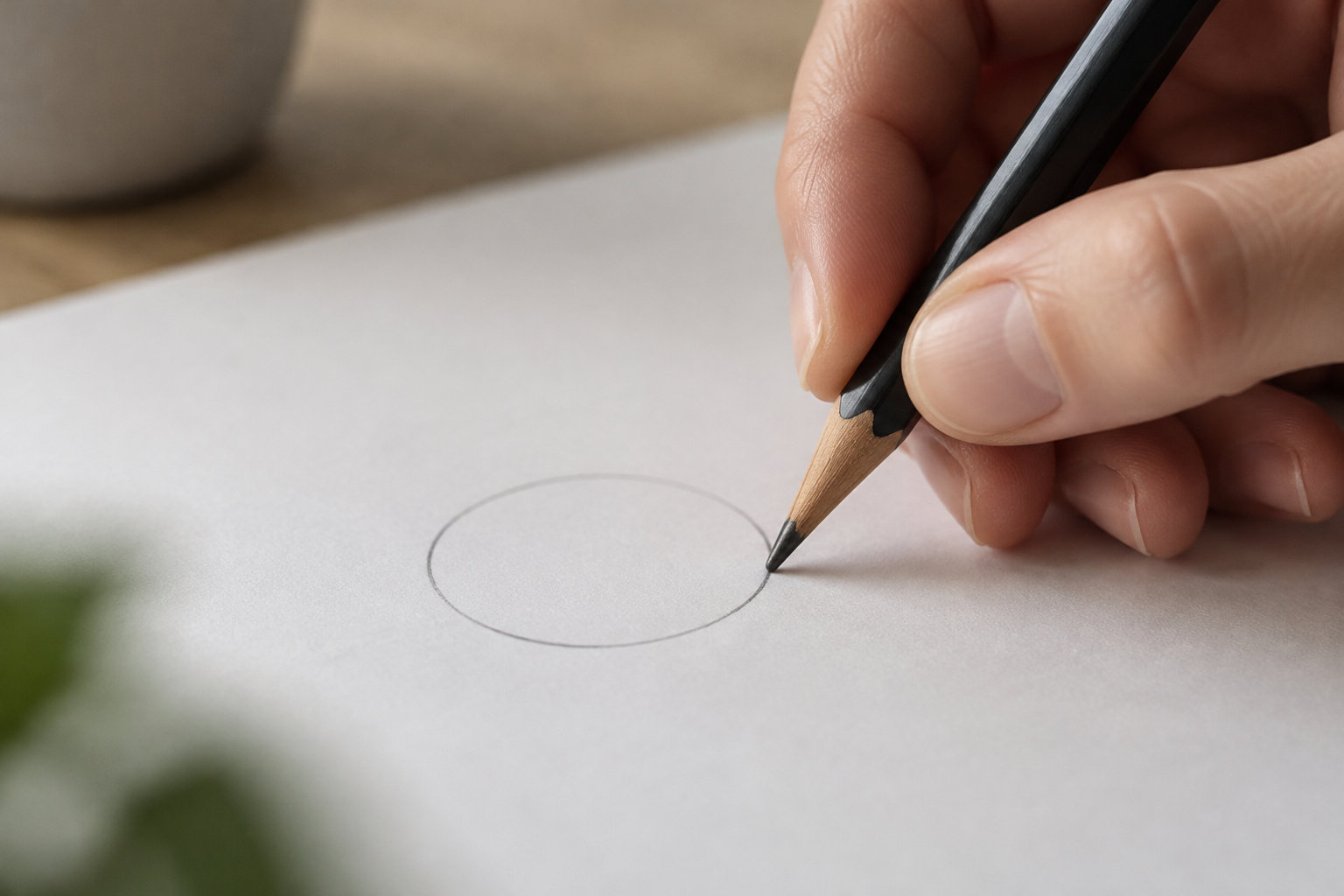
Trace its inside circle on paper, keeping the pencil close to the inner edge. Take the tracing to a jeweller for an approximate size. It is an estimate, not a measured size.
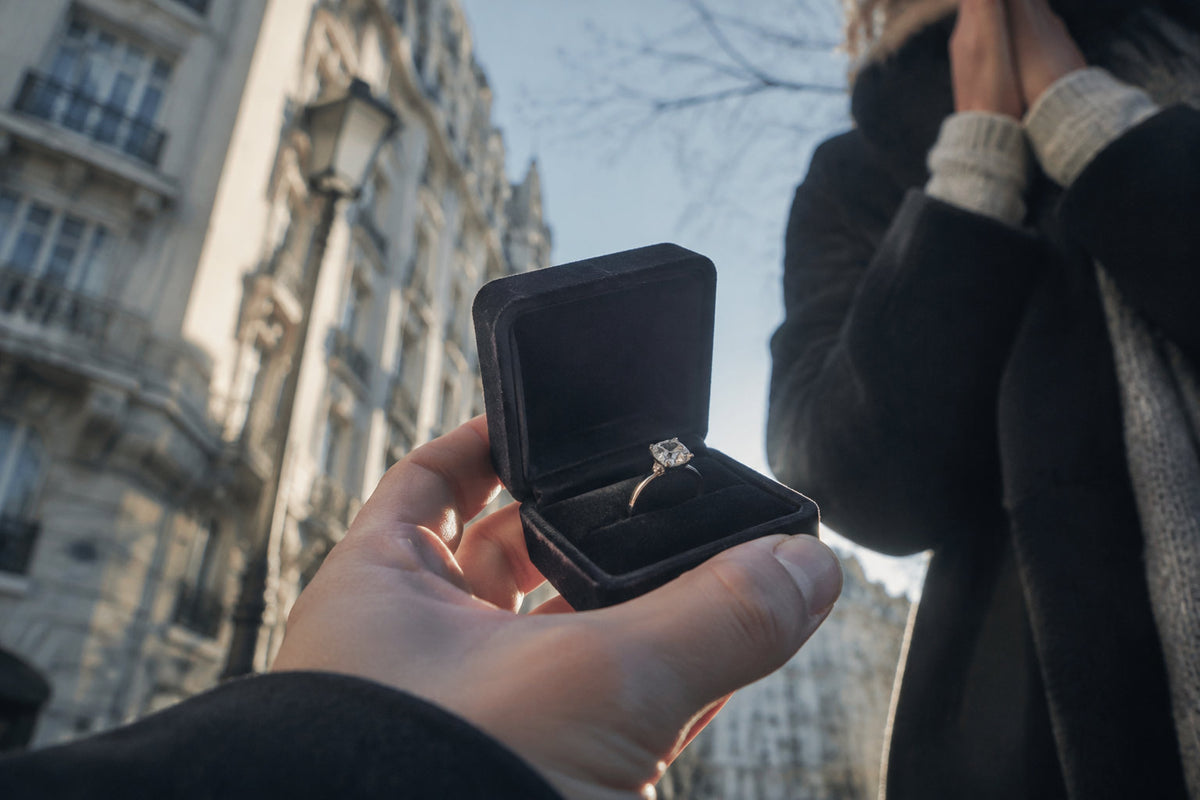
A wrong size can leave you with a ring you cannot send back. Some Canadian retailers do not accept returns on rings that have been resized, so read the return and resizing terms before you order a surprise ring.
For how a ring’s shape changes how big it looks, read what to consider before buying.
What to do if the ring does not fit
Resizing depends on the design, the metal and the stones:
- A ring can often change by one or two sizes.
- Full eternity rings, with stones all the way round, are usually hard or impossible to resize.
- Titanium, tungsten, cobalt or stainless-steel rings can also be hard or impossible to resize.
- Pavé or bead-set stones along the band need more work than a plain solitaire.
Before you order
- Compare resizing costs: CAD 60–135 to make a simple gold ring smaller, CAD 75–250 or more to make it larger.
- Read the return policy. A resized ring may not be returnable.
- Ask the jeweller for the price of the work on your specific ring before you buy.
- Write down your measurement in millimetres and in French size.
- Give that original measurement to the jeweller.
Measure the finger that will wear the ring, indoors at room temperature, and make sure the ring slides over the knuckle. Repeat the measurement until you get the same result twice.
Write down your size in millimetres and in French size. Then take it to a jeweller, and ask about resizing costs and return terms before you order.
Frequently Asked Questions
Can I measure my ring size on my phone?
Yes, you can, with a phone app. Some apps match your ring to an on-screen circle. Calibrate your screen first, so the circle shows the true size. Finger size can change, so measure again if a ring stops fitting.
Is there a virtual ring sizer I can use?
Yes. Some apps let you place a ring on the screen and match its inside edge to an adjustable circle.
Calibrate your screen first, or the circle will not show the true size. Use it as a check, since finger size changes with temperature.
Does a person’s ring size stay the same over the years?
No, your ring size does not stay exactly the same. Finger size changes with temperature, so a cold day can give a different result from a warmer day.
If a ring no longer fits, measure your finger again before you order a new one.