



Article: 10k vs 14k gold: which is better for your jewellery?
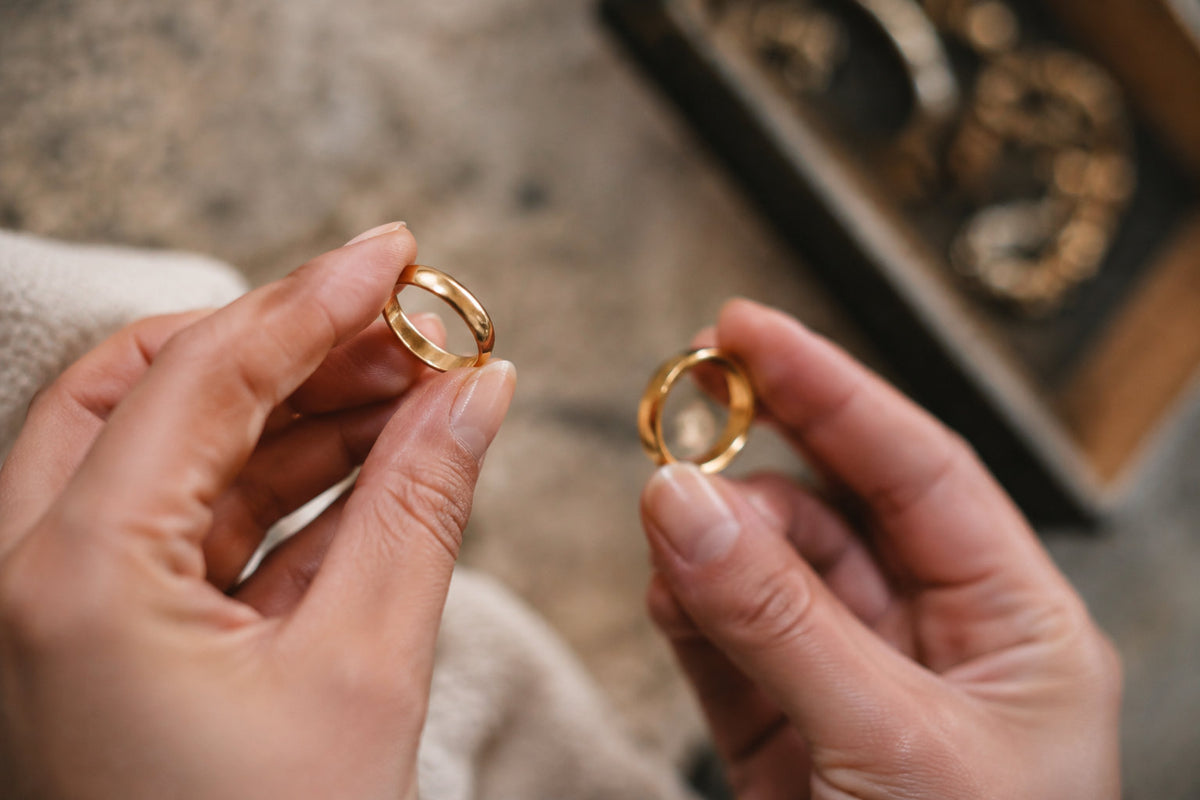
10k vs 14k gold: which is better for your jewellery?
10K and 14K are both solid gold, but they differ in gold content, colour and price.
The karat mark alone won’t tell you which one suits your piece. In this article, we compare purity, durability, colour, price, skin sensitivity and daily wear, so you can choose the karat for your use and budget.
Which is better: the short answer for most buyers
For most buyers, 14K is the stronger all-round choice for jewellery you wear often. It holds more gold and gives a warmer yellow colour, so it looks richer on a ring or a necklace worn every day.
It is also the usual pick for everyday rings. If scratches worry you more than colour, 10K resists them better.
Which karat fits you
Choose 10K when
- price or hardness matters more
- the piece is a daily stud or huggie
Choose 14K when
Neither karat is better in absolute terms. Match it to wear, budget and colour.
If you are also choosing the stone, read how to choose between lab grown and natural diamonds.
What the karat number really tells you
A karat number tells you how much of the metal is gold. Gold is counted in 24 parts. 10K has 10 parts gold, about 41.7%. 14K has 14 parts, about 58.3%.
The rest is other metal mixed in. More gold means a higher price but a softer piece.
Before you buy, check four points, and for a surprise proposal, see surprise-proposal engagement rings:
- Karat mark: 10K or .416, 14K or .583.
- Trademark: any gold mark must be accurate and backed by a trademark or hallmark.
- Solid, not plated: a gold layer over base metal is not solid gold.
- Other metals: copper, silver or zinc, mixed differently by colour.
Durability and scratch resistance over time
Why 10K resists scratches better
In one standard yellow-gold comparison, 10K scores 128 HV and 14K scores 134 HV on the Vickers hardness scale. The gap is small, and these figures describe those alloy recipes, not every piece.
So karat alone won’t settle scratch resistance: the alloy recipe matters. If you want 10K for daily wear, see 10K necklaces.
What affects wear beyond the karat
Gold content is only one part of durability. The alloy mix and the design also decide how well a piece lasts.
A chain bracelet has linked parts that rub against each other, so wear builds up at every joint. A ring has one continuous band, so its whole surface picks up scratches from keys and other objects.
Two 10K pieces can differ in hardness, because the alloy recipe changes the result. Polishing also takes off a little metal each time, so polish light scratches only when they show. Polishing again and again wears a thin ring down over time.
Colour and price: what the difference costs you
How the colour differs
14k usually looks warmer and richer than 10k. It holds more gold, and gold sets the colour. The other metals in the alloy shape the final shade, so two pieces of the same karat can look different.
Some 14k alloys look bright yellow, others rich or pale. Hold the piece up in daylight to judge the shade you want.
The table below puts the two karats side by side on gold content and colour.
| 10K gold | 14K gold | |
|---|---|---|
| Gold in the alloy | 41.7% (10 of 24 parts) | 58.3% (14 of 24 parts) |
| Other metals in the alloy | 58.3% | 41.7% |
| Gold content compared | Baseline | About 40% more gold |
| Usual colour | Less warm, depends on the alloy | Warmer and richer, depends on the alloy |
Why 14K costs more
The karat is only part of the price. Design and the amount of metal in a piece also set the cost. RNB Jewellery’s 10K Symmetric Diamond Huggie Earrings set 16 accent diamonds, while its 14K Dangle Chain Diamond Earrings set two, so their prices can’t be compared by karat alone.
For a 14K piece with diamonds to compare against, see the Pavé Heart Diamond Necklace.
Which gold suits rings, bands and earrings
Engagement rings and wedding bands
For engagement rings and bands, 14K is the balanced choice. It keeps a warm yellow colour and handles daily wear well, so it suits everyday rings.
Choose 10K if scratches and price matter more to you. It costs less and resists scratches better, but its exact hardness depends on the alloy. Ask your jeweller about resizing before you buy.
Related products


Earrings and sensitive skin
Match the karat to the earring style:
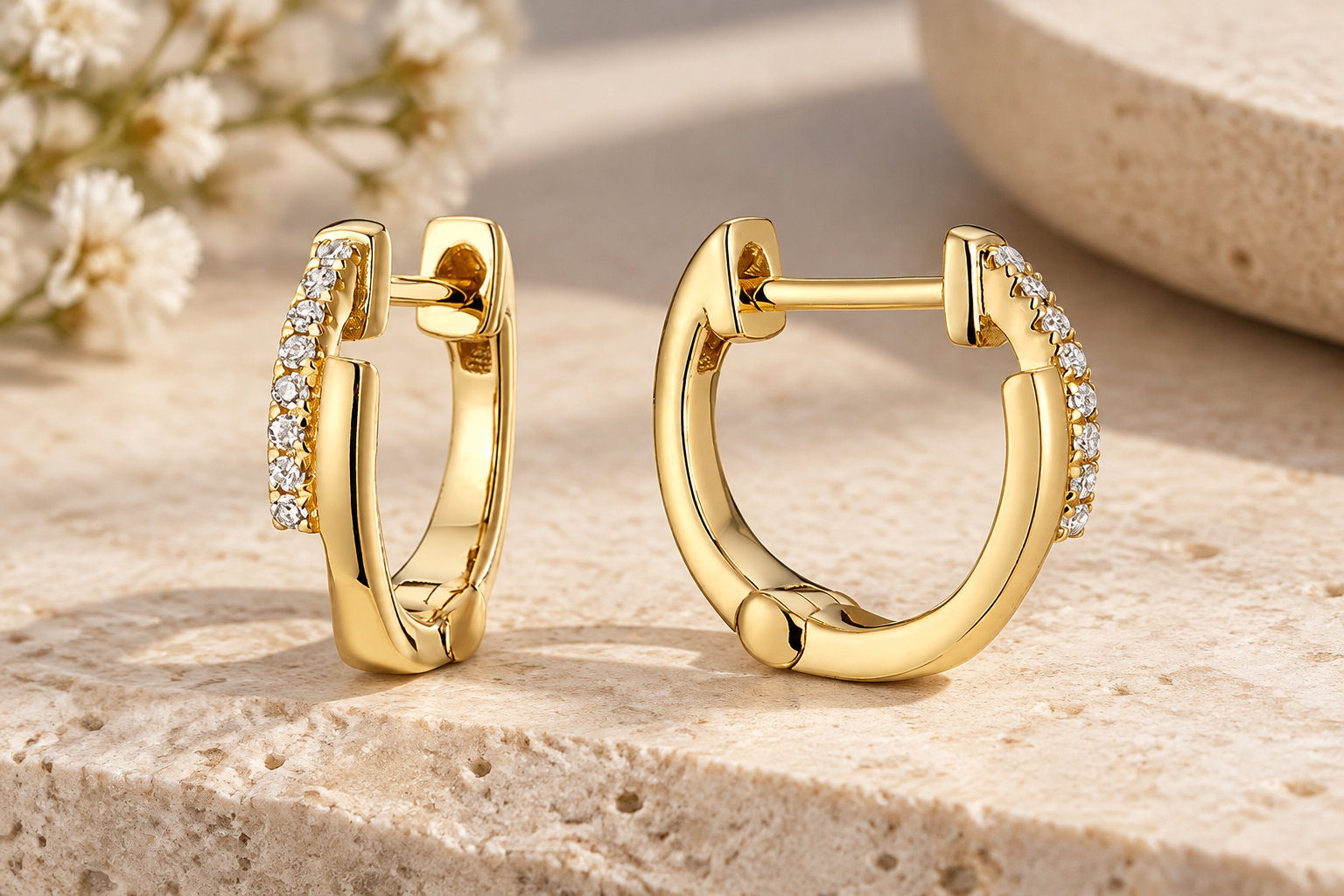
- Studs and huggies for everyday wear: 10K, like the Symmetric Diamond Huggie Earrings from RNB Jewellery.
- Drop and dangle styles: 14K, like the Dangle Chain Diamond Earrings from RNB Jewellery, for a richer colour that shows more.
- Sensitive skin: check the earring backs too, since nickel in them can cause an allergic reaction.
Nickel-free options
-
Read the label
A karat mark alone does not guarantee nickel-free. Some white-gold alloys contain nickel, even at 10K or 14K. For a nickel-free stud, see solitaire diamond studs.
-
18K, 22K or 24K yellow gold
More gold, softer metal, so it scratches more easily.
-
Pure sterling silver
Cheaper than gold, but it tarnishes.
-
Platinum
Naturally white, and a listed nickel-free option.
Showers, water and care for either karat
Solid 10K and 14K gold both handle ordinary water and showers. You can wear them in the shower or while washing your hands.
Chlorine and household cleaners are different. Take your jewellery off before swimming in a chlorinated pool or using cleaning products. Chlorine bleach can pit the surface, which means small holes form, and it can damage the alloy.
Follow this routine:
- Rinse after showering to wash off soap and shampoo residue.
- Clean gently with warm water, mild dish soap and a soft brush.
- Rinse over a glass of water so a loose stone cannot fall down the sink.
- Store pieces apart so they do not rub and scratch.
- Polish out light scratches.
How to choose the right karat for your piece
Three questions decide the karat: how often you will wear the piece, your budget, and the colour you want. For a piece you wear daily, where scratches worry you, pick 10K. It resists scratches better and usually costs less.
Want a warmer yellow? Pick 14K, which contains more gold.
For 10K, see the New Arrivals 10K collection and check these first:
- Read the karat mark: 10K is .416, 14K is .583.
- Confirm solid gold, not plated, with a trademark or hallmark beside the Canadian gold quality mark.
- Compare the same design and weight to see the price gap.
- Nickel allergy? Ask if the alloy is nickel-free before buying.
Pick 14K for a piece you wear every day and want in a warmer yellow. Pick 10K if price and scratch resistance matter more to you.
Next, check the karat mark and trademark on the piece, and confirm it is solid gold. Then compare the same design in both karats to see the price gap.
Frequently Asked Questions
Is 10K gold real gold?
Yes, 10K gold is real gold. It contains 10 parts gold out of 24, or about 41.7% gold, with other metals mixed in to make up the rest.
Does 10K gold tarnish over time?
Yes, 10K gold can tarnish over time, because the other metals in its alloy can react with chemicals. Chlorine bleach and household cleaners are the main thing to avoid, so take your jewellery off before using them.
Can a 10K gold ring be resized?
Yes, a 10K gold ring can be resized. Whether yours can depends on its design and construction, so ask a jeweller to check the ring before you resize it.